
A sea strainer is one of the hardest-working components in a marine cooling system. Whether it protects a main engine, generator, air conditioner, or washdown pump, it plays a vital role in keeping debris out of critical equipment so water can flow.
But unlike impellers or fuel filters, sea strainers do not typically have a fixed replacement schedule. In many cases, a quality bronze sea strainer can remain in service for decades with routine maintenance and occasional replacement of wear components.
So how do you know when it is time to replace a sea strainer instead of simply cleaning or rebuilding it?
>>> Don’t miss: Popular Sea Strainers Compared. We review 8 popular options.
Most sea strainers don’t need routine replacement
One of the most consistent themes across boat maintenance guides, manufacturer resources, and boat owner forums is that sea strainers are “maintained” rather than “replaced.”
For example, one marine expert describes rebuilding a bronze sea strainer by replacing three gaskets, cleaning the components, and putting it back into service. He notes that quality bronze strainers can last a lifetime with occasional rebuilding and maintenance.
Likewise, BoatTEST buyer guides devote ample attention to sea strainer installation, inspection, and cleaning but do not recommend replacing strainers at specific age intervals.
For standard sea strainers – that require regular manual cleaning and descaling – you usually should not have to replace one due to age.
Not all sea strainers require cleaning and regular maintenance
Traditional sea strainers require periodic cleaning to remove marine growth and maintain water flow.
ElectroStrainer takes a different approach, combining a sea strainer with marine growth prevention technology that helps stop barnacles, mussels, and algae from establishing themselves inside the strainer. We’ll take a closer look at how it works later in this article.
1. Housing is cracked
If you do need to replace a sea strainer, one of the most common reasons is visible physical damage.
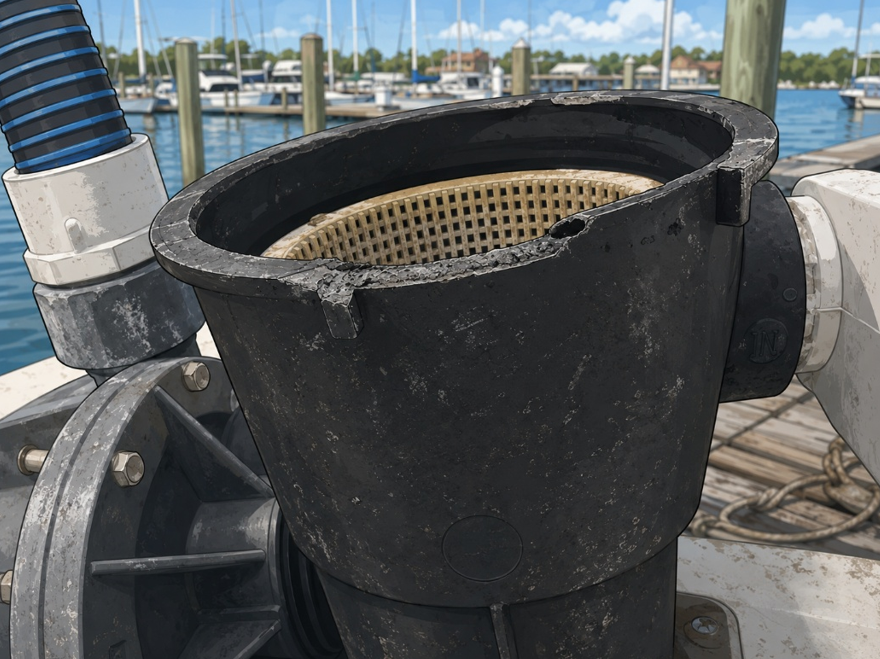
When servicing your strainer, inspect the strainer body, lid, mounting points, and fittings for:
- Hairline cracks
- Stress fractures
- Impact damage
- Broken mounting ears
- Cracked sight glasses
Even small cracks can allow air into the cooling system or create water leaks that worsen over time.
2. Severe corrosion
Bronze and other marine-grade metals are highly durable, but not immune to corrosion.
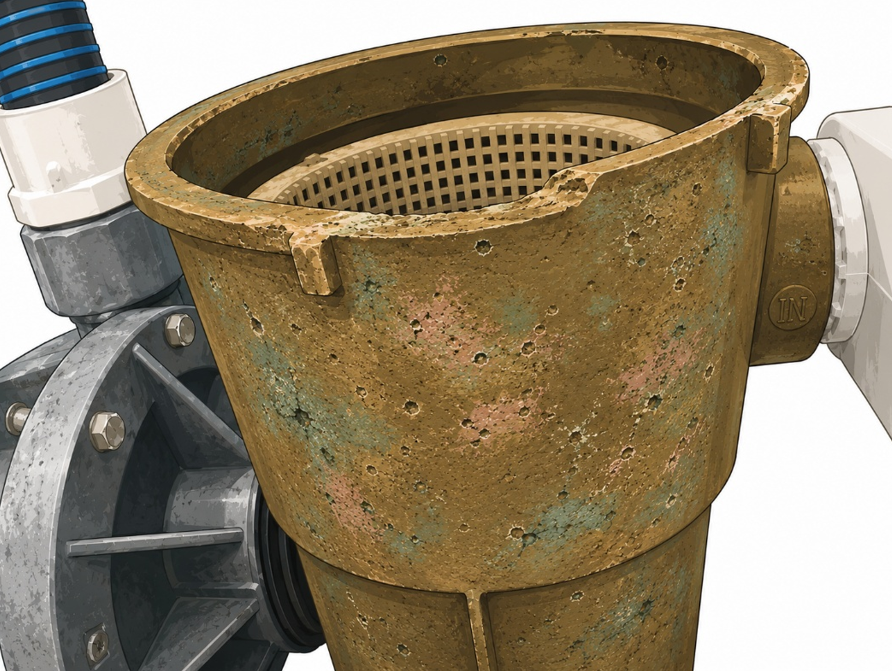
Watch for:
- Deep pitting
- Flaking metal
- Dezincification
- Electrolysis damage
- Structural thinning
Boaters on The Hull Truth discuss how deteriorated intake strainers can cause problems with ponding, electrolysis, and other damage tied to through-hull fittings.
Surface discoloration itself isn’t necessarily a problem. However, once corrosion begins to impact structural integrity, replacement becomes the safest option.
3. Persistent leakage
Many sea strainer problems aren’t caused by the basket itself but by the strainer’s sealing system.
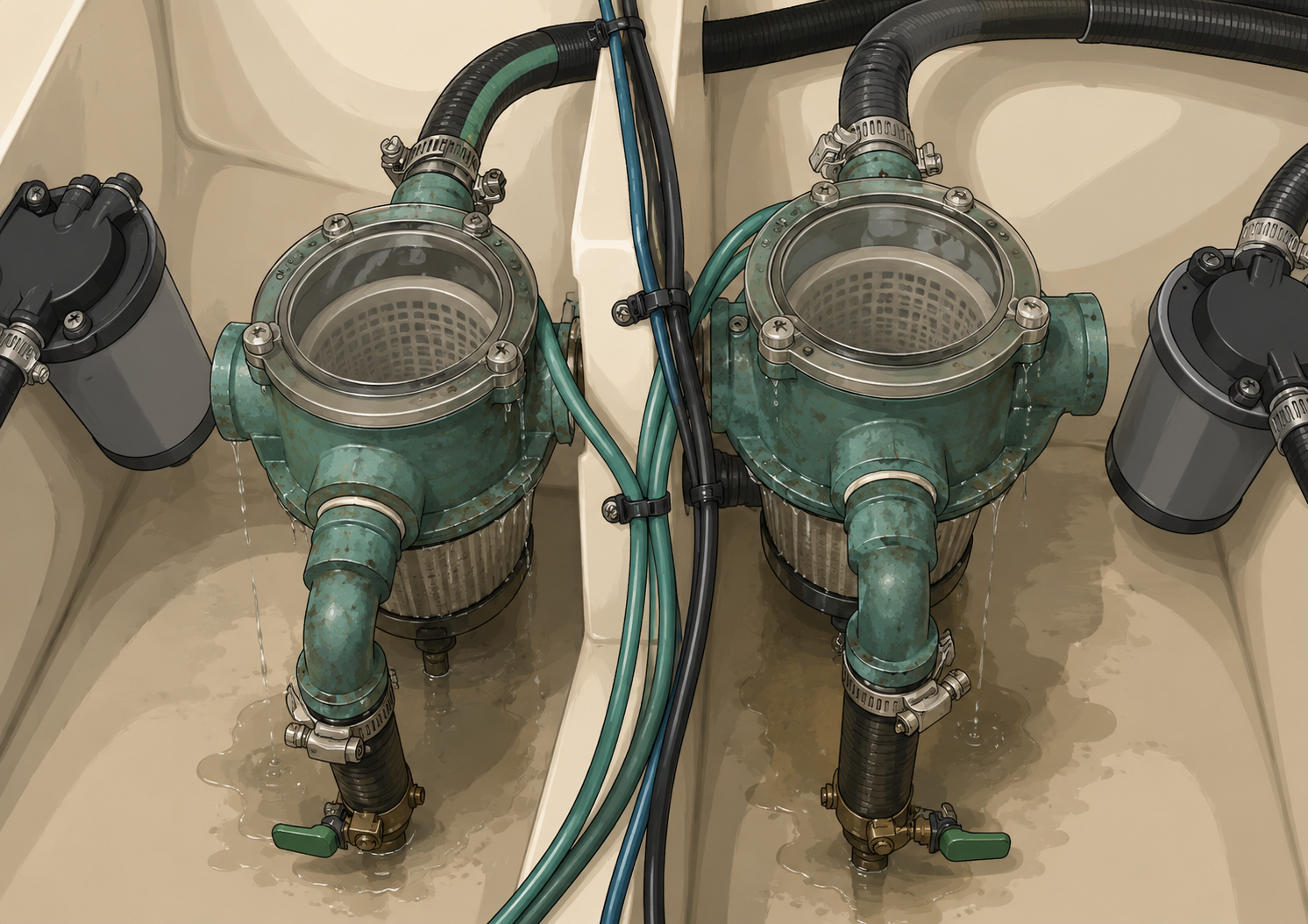
If your strainer continues to leak after replacing the gasket or O-ring, inspect:
- The lid
- Sealing surfaces
- Threads
- Tie rods
- Fasteners
Warped components or damaged sealing surfaces can make it impossible to maintain a watertight seal.
Air leaks can cause raw-water pumps to lose prime, reduce cooling-water flow, and contribute to overheating issues.
Visible air bubbles can also indicate a lid sealing problem.
4. Visible basket damage.
While the strainer body may last for decades, baskets are wear-down components.
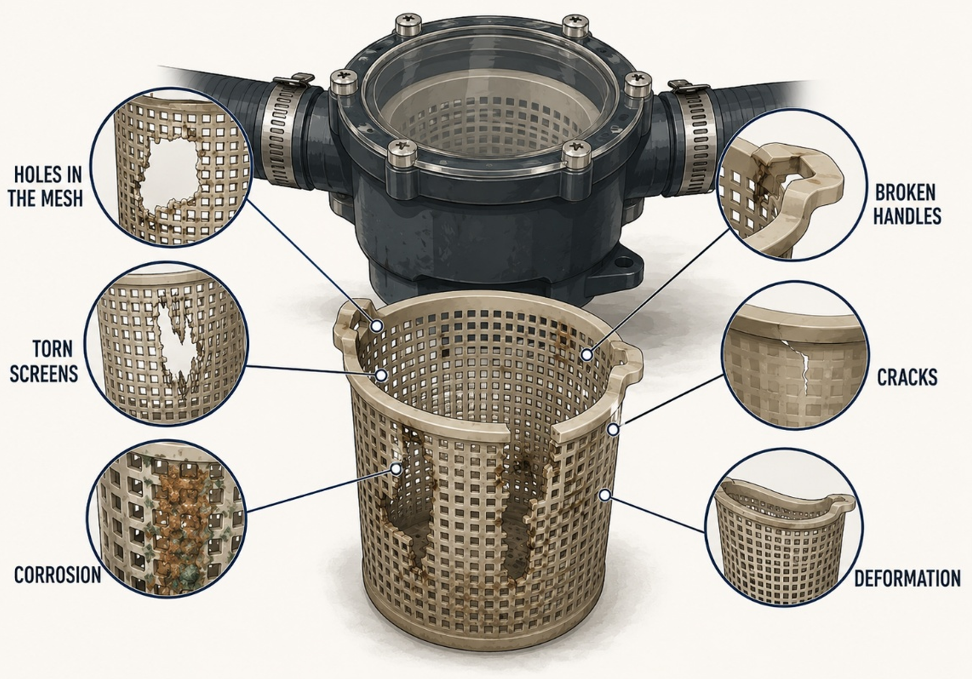
Replace the basket if you notice:
- Holes in the mesh
- Torn screens
- Corrosion
- Broken handles
- Cracks
- Deformation that prevents proper fitment
A damaged basket can allow debris to bypass the filtration system and reach pumps, heat exchangers, condensers, and oil coolers.
In many cases, replacing the basket is all that is needed. However, if replacement parts are no longer available, replacing the entire strainer may be the most practical solution.
5. Consider replacement if the strainer is difficult to inspect or clean
Not all replacement decisions are driven by failure.
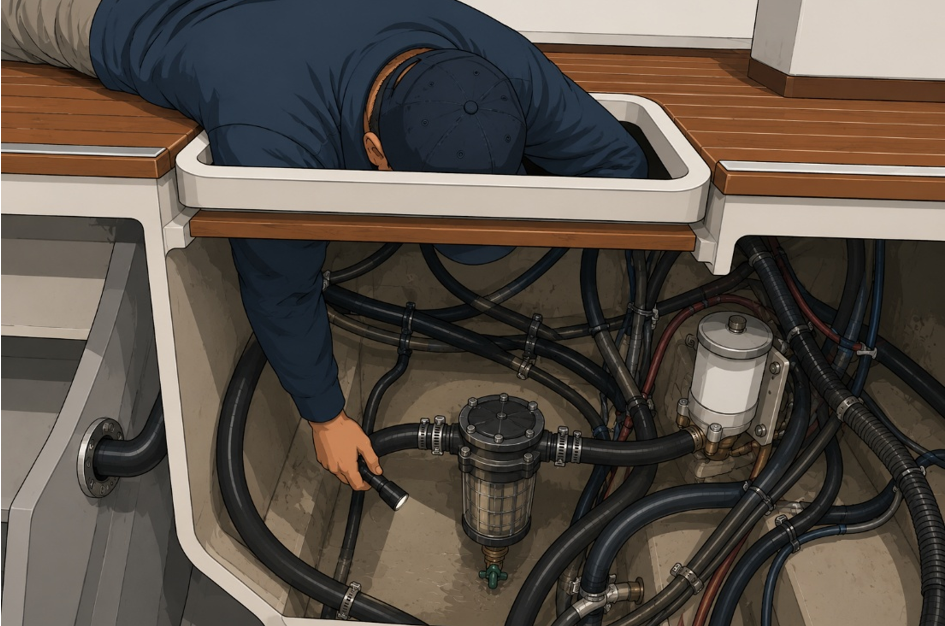
Many older sea strainers remain functional but are difficult to service.
Modern strainers often offer:
- Clear lids for quick inspection
- Larger baskets
- Easier access
- Faster cleaning
- Better winterization options
If your current strainer requires tools, awkward access, or extensive disassembly just to inspect the basket, an upgrade may be worthwhile.
Easy-maintenance strainer
For many boat owners, they replace still-functional sea strainers to reduce cleanings – or as owner-captain Scott Weiss put it, to eliminate “strainer maintenance hell.”

ElectroStrainer is an advanced-tech strainer that prevents marine growth inside the strainer and its connected raw-water cooling systems.
How it works
ElectroStrainer uses the salt that naturally occurs in seawater for electrochlorination. D/C current is applied to water to create a small precise dosage of chlorine that prevents biofouling.
The chlorine dissipates before it leaves the lines, so chlorine is not released back into the ocean.
While it does require minimal cleaning, ElectroStrainer eliminates the need to descale.
- Many boat owners in warm waters scrub their strainers every week or every other week.
- ElectroStrainer owners clean out (usually a quick rinse) every few months or so – whenever the flow rate drops.
Additionally, A/C lines stay clear. Weiss’ lines used to be “black they were so coated with stuff,” but now they are clear and look “brand new” after months of use.
6. Chronic flow restriction
If your cooling system repeatedly experiences restricted water flow despite regular maintenance, the problem may not be debris.
It may be the strainer design itself.
Owners on The Hull Truth noted that basket strainers generally provide more filtering surface area than external scoop strainers, making them easier to inspect and less prone to severe restriction from localized debris accumulation.
Likewise, some boat owners replace older external strainers with larger basket-style strainers to improve serviceability and cooling-system performance.
If a properly maintained strainer is creating a bottleneck, upgrading to a larger or more modern design may improve cooling-water flow.
Frequent cleaning does not mean the strainer is failing
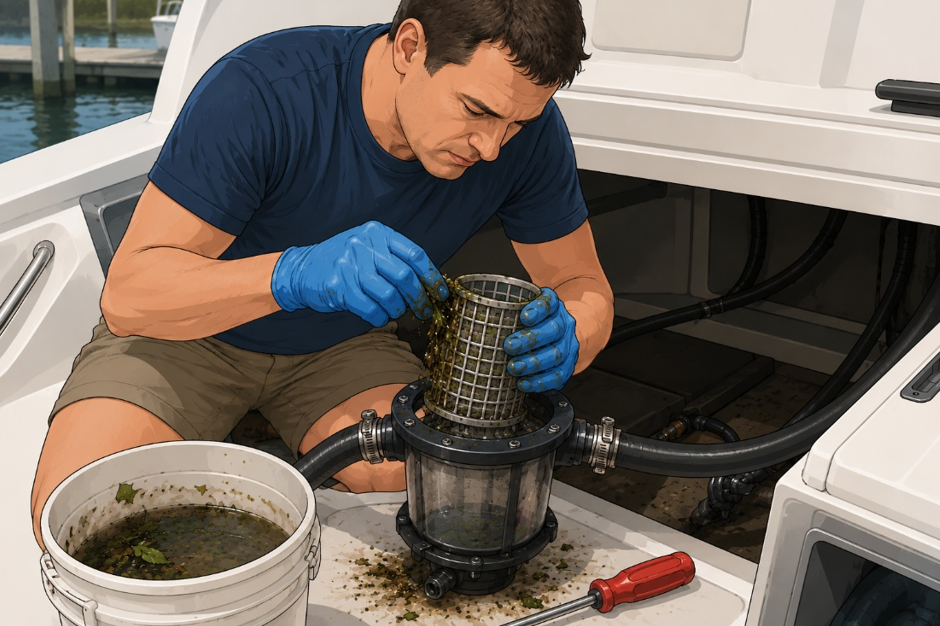
While unpleasant to deal with, a strainer that requires frequent cleaning is often doing exactly what it was designed to do.
In another Hull Truth discussion thread, an owner hoped to find a replacement strainer that wouldn’t require as much cleaning. Experienced boaters pointed out that the basket strainer was protecting the system and that cleaning was simply part of normal operation.
If you’re boating in areas with eelgrass, floating weeds, jellyfish, leaves, or other debris, regular cleaning is expected.
Not running your A/C or upgrading your strainer to an ElectroStrainer, which uses electrochlorination to prevent marine growth, are generally the only two alternatives that boaters have.
Wrapping it up
Most sea strainers don’t have a replacement interval.
A quality sea strainer should be inspected regularly, cleaned as needed, and rebuilt when wear components such as gaskets, O-rings, or baskets reach the end of their service life.
Replace the entire sea strainer when you discover:
- Cracks or structural damage
- Severe corrosion or dezincification
- Damaged sealing surfaces
- Persistent leaks
- Obsolete or unavailable replacement parts
- Chronic flow restrictions caused by the strainer’s design
Otherwise, routine maintenance may keep a well-built sea strainer in service for many years — or even decades.
FAQs
What is a raw water strainer for boats?
A raw water strainer for boats is a filtration device installed between the seawater intake and onboard equipment such as engines, generators, and air conditioners. Its job is to capture weeds, shells, jellyfish, and other debris before they can clog pumps, condensers, heat exchangers, or cooling passages.
Most raw water strainers are designed to be cleaned and maintained rather than replaced on a fixed schedule. Replacement is typically only necessary when the housing cracks, corrosion compromises structural integrity, or the strainer can no longer maintain a reliable seal.
How does marine plumbing affect sea strainer lifespan?
Marine plumbing plays a major role in sea strainer longevity. Poor installation, excessive vibration, overtightened fittings, trapped water during freezing conditions, and stray electrical current can all shorten the life of a sea strainer.
Experts recommend inspecting related components such as hose barbs, fittings, tie rods, gaskets, and through-hull connections because failures elsewhere in the marine plumbing system can create leaks, corrosion, or flow restrictions that affect strainer performance.
What is a centralized seawater system, and does it need a sea strainer?
A centralized seawater system uses a common seawater supply to serve multiple onboard systems, such as air conditioning units, refrigeration equipment, watermakers, or other cooling loads. Because multiple systems rely on the same seawater source, proper filtration becomes even more important.
A damaged, clogged, or undersized sea strainer can affect every component connected to the centralized seawater loop. For that reason, marine professionals generally recommend using a properly sized, easily serviceable strainer that can maintain adequate flow under varying operating conditions.
How often do you have to replace strainer-related parts, like seals and housing?
There is no universal replacement interval for sea strainer components.
- Gaskets and O-rings should be replaced whenever they become brittle, stretched, flattened, cracked, or unable to maintain a watertight seal. Some sources suggest they can generally last 10-15 years.
- Baskets should be replaced if they develop holes, corrosion, tears, or deformation. Solid bronze or bronze-coated baskets can typically last 3-10 years depending on boating patterns and warm environment. Corrosion and harsh cleaning acids can rapidly strip bronze coatings and pit the metal.
- The housing itself often lasts for 15 years to multiple decades , and typically only requires replacement if it becomes cracked, severely corroded, damaged by impact, or incapable of maintaining a reliable seal. Multiple sources reviewed for this article emphasized that quality bronze strainers are commonly rebuilt rather than replaced.
What causes a sea strainer to crack?
Sea strainers can crack due to impact damage, overtightening, vibration, freeze damage, UV degradation, age-related wear of plastic components, or manufacturing defects.
Cracks are more commonly associated with plastic or composite housings that have been exposed to years of heat, UV radiation, and vibration.
Even small cracks can allow air into the cooling system or cause water leaks, which is why marine maintenance experts generally recommend replacing a cracked strainer housing rather than attempting a repair.